Showing posts with label movies. Show all posts

Friday, May 6, 2016

Is Love Overrated? by Val Ramirez


It's girls night out and you decide to hit the movies to see a romance with your girls. You are preparing yourself for the many tears that are bound to come. After the movie, you all are left with the perfect image of love. Your night is spent dreaming about “the one." However, do movies really display love with all of its flaws?

Romantic movies tend to exhibit the perfect love story as a new girl in town, love at first sight, and all that cheesy stuff that comes with it, while leaving out the part after the “happily ever after.” Let’s talk about after the whole “happily ever after." Is it really that happy? Maybe yes, and maybe no; but movies tell stories to make us believe it is. Is that a reality in the real world? Not so much. Divorce is an issue that definitely gets rid of the whole “happily ever after." But how come movies never tend to go farther than the whole falling-in-love scene? I believe movies do not include what happens after the “happily ever after” because who would want to go see a movie with a crappy ending? In order for viewers of the movie to be satisfied with the film, directors conclude the film with a happy ending, not reality.

Society has portrayed the man in the story to be handsome and charming and to be the perfect boy everyone wants to be with. Many of us after watching a romantic movie look for our prince charming, believing the perfect guy is out there with no flaws; but, in reality, we all have our flaws. We tend to base our expectations of love on a 160 minute film. Funny, right? 

Typically in romantic movies, love is being portrayed as something simple and everlasting, but that’s not always the case in the real world. Since we were little, we've learned that being in love is like being in a fairy tale. It started by our mothers reading fairy tale books to us and from watching kids' movies with princes and princesses. We have grown up with the idea that a prince who is charming, generous, handsome, strong, and loving will arrive soon with his carriage to sweep us off our feet. Does that really portray men in reality? Princesses are illustrated as women who are beautiful, perfect, kind, and loving, but that’s not the case with real life women.


The film Dirty Dancing, is an example of the dreamy love women dream of. Baby, who is one of the main characters, falls over heels for a much older dance instructor who she comes across with .The scenery of the movie makes it captivating for the viewer; from Johnny teaching Baby how to dance, to the connection between them being portrayed throughout their time together. The scenes of Baby and Johnny dancing allows the movie to be filled with passion and intriguing love that has you day dreaming after seeing it.

Media, fairy tales, and movies have all contributed to the image we have of love and our expectations that we have for it. Those expectations are out of reach. While being in love with someone has its perks, the real understanding of love will come when one experiences love for one's self.

For a blog with similar content go to this link:


http://tinybuddha.com/blog/are-your-expectations-setting-you-up-for-disappointment/

Monday, May 2, 2016

Harry Potter by Branum G

       J.K. Rowling wrote the marvelous, seven-book series that appeals to many young adults. Through this series the reader can immerse themselves in the life of Harry Potter, the main character. Harry starts out as  a young kid who is raised by his none-magic family after his parents were maliciously murdered by Lord Voldemort, the main antagonist (to be covered later on). When Harry gets a letter from Hogwarts, the school for young wizards and witches, his whole life changes. He becomes friends with a boy named Ron and a girl name Hermione. Harry relies on the two to help him through his many adventures. Ron, who is a loyal friend, and Hermione, who is quite smart, become like family to Harry, and the reader gets to enjoy that throughout the series. This trifecta of friends faces off against the evil that seeks to control the wizarding world. All the threats originate from a dark wizard named Lord Voldemort, who killed Harry’s parents. He also attempted to kill Harry, but inadvertently harmed himself, making Harry his only true rival. Lord Voldemort is a dark wizard with seemingly unfathomable power that he uses to terrorize and control the wizarding world. Voldemort is so powerful that his name is even feared to be said, deeming him “He who shall not be named”. Harry, Ron, and Hermione use their strong bond to fight back against the opposing threat, while making friends along the way. Harry, who’s family is dead except for his non-magic aunt and uncle, makes a family of his own through his friends, which gives him the will to fight.

       In the last book, the battle between good and evil truly takes shape as Harry and Voldemort are forced to face off against one another. Like most all books Harry, being the hero, emerges victorious after defeating Voldemort and sending the few remaining dark wizards running. With the fear of tyrant rule gone, the magical world finds peace and happiness, as does Harry. He is naturally referred to as a hero, as he should be, and creates a good prosperous life for himself.

      These books contain much more excitement and many great qualities that appeal to both younger and older audiences. As the saying goes, “Do not judge a book by its cover.” However, even if one was to judge the book by the cover, it still seems enticing. 

For more on Harry Potter go here: https://www.pottermore.com/


Repeat My Name: The Female Protagonists of Today's Stories by Kayley Boddy


With the latest feminism craze on the rise, it's not surprising to see our YA books and blockbuster films sporting fresh-faced teenage girls as the protagonists. In the last four years, movies and novels such as The Hunger Games, Divergent and The Mortal Instruments have all bought into the female protagonist genre. It's actually what we've come to expect- a shy, small-town girl, caught up in a love triangle, suddenly faced with a war or an apocalypse and being turned into a fighter. And while our books and our films have delved into this female spotlight and shown us that females can be strong too, we're still missing something. We've forgotten how to make our characters diverse. We've instead turned our potentially multi-layered female protagonists into bland, stereotypical, worn-out heroes. Where did the originality go?


Think of it this way: out of every story with a female protagonist you've heard of in the past few years, it's more than likely that they all seem to be speaking the same message, in the same way. They live in the same situations: they come from a small town, they're shy, they have low self-confidence, and they're even white (which, of course, is another issue). Bonus points if there's a love triangle or if they're fighting for a boy they're in love with: Katniss Everdeen had Gale and Peeta, Tris Prior had Four, Cassie Sullivan had Ben and Evan, Sadie Kane had Anubis and Walt. Even Princess Leia had her trip-ups in the realm of love, with Luke and Han. Usually, they all possess the same flaws and actions as well. Hermione Granger, Katniss, and Bella Swan flirted to obtain what they desired. Cassie and Tris fight to keep their families together as their worlds tumble down around them. The closest of all female protagonists seem to be Katniss and Tris: both rebel against their governments for freedom. All of these characters live in a half-life, not yet fully complex and human, but only the shell of a fleshed-out character on a page. It seems to be that our mighty female protagonists are still being shaped into a stereotype we have developed in regards to our literature. Instead of Jane Eyre and Janie Starks, we're left with females from an English class character development sheet. And why do we do this?

The answer's simple. From our novels, we expect the characters we're familiar with, and therefore our writers build them accordingly and leave it at that. Nothing new is added because unfamiliarity doesn't sell novels. No new depths are added to our female protagonists because the only female protagonists we know are two-dimensional ones. We see shy, feminine characters because they reflect us, and we like being exposed to their strength because we feel as though we have that same strength inside us. We watch them fall in love amidst world crises because we hope we can find love amidst our own life crises. We were intrigued to see Tris Prior in such a fearless faction yet so weak around Four because it satisfied the craving we had for a strong female character; that satisfaction blinded us from the fact that the rest of her character is built upon a hopelessly-in-love stereotype. As long as writers include these few small traits that define the YA female protagonist, they satisfy our expectations. Females in our novels sell because they're simply female, and as long as they fit into the expectation we have for them, writers can neglect their full potentials. Our female protagonists are beginning to lack the character development and complexity they need because the only aspect readers are currently focused on is the fact that they are female.


We're missing the entire purpose of writing when we have these female protagonists. Nowadays, novels compete for the most dramatic love triangle or the most fragile-yet-unbreakable character. They compete to sell, and they sell by advertising females on their front covers; YA readers devour female protagonists because they play into the equal-representation-of-women-in-novels idea we work for. And the saddest part about it is that it's working. Why is it that in a time where females are being pushed to have the same complexity and ability as men, their representation in writing is still weak and worn out? And what does that say about our true ambitions? We're missing our female protagonists; we're receiving sugarcoated female stereotypes.


I cannot say that female protagonists in novels have always been this way, however, and I cannot say that I haven't found my own females sinking into this stereotype. Just as mentioned earlier, there are fabulous examples of female characters in novels out there, even though most of them still develop their stories through falling in love. Jane Eyre and Janie Starks strive for self-fulfillment, put love second, and are truly confident with themselves. Jo March broke the female stereotype of the nineteenth century and proved that females don't have to first be weak in order to find their strength. Lisbeth Salander is so creatively complex and intriguing that it's hard not to call her one of the greatest female protagonists in literature. All of these females are not just females, but real, complex humans with their own diverse ambitions. It's not just a man or the quest for love that drives them on and helps them discover themselves, but the traits and qualities they've developed separately, the lack of which has sunk our female protagonists into so deep of a hole. Our literary females have to thicken.

When it comes down to it, the way our writers develop the female protagonists of their novels needs to change. We're trading the character essentials every masterpiece novel has for the satisfaction of a female-character demand. Once this demand dies out, all we will have left to show for the literature of our generation is the repeated story of the same girl in the same relationships. And that's not something to be proud of. The female protagonists in our YA novels need humanity. Our females need diversity; they need complexity; they need originality. We cannot repeat and recycle her name any longer. Instead, we must introduce her.

For similar content, check out this post: http://bust.com/feminism/10251-female-protagonists-are-on-the-rise-diversity-isnt.html


Wednesday, April 27, 2016

Super Heroes Need Help Too

by Luke Buckner

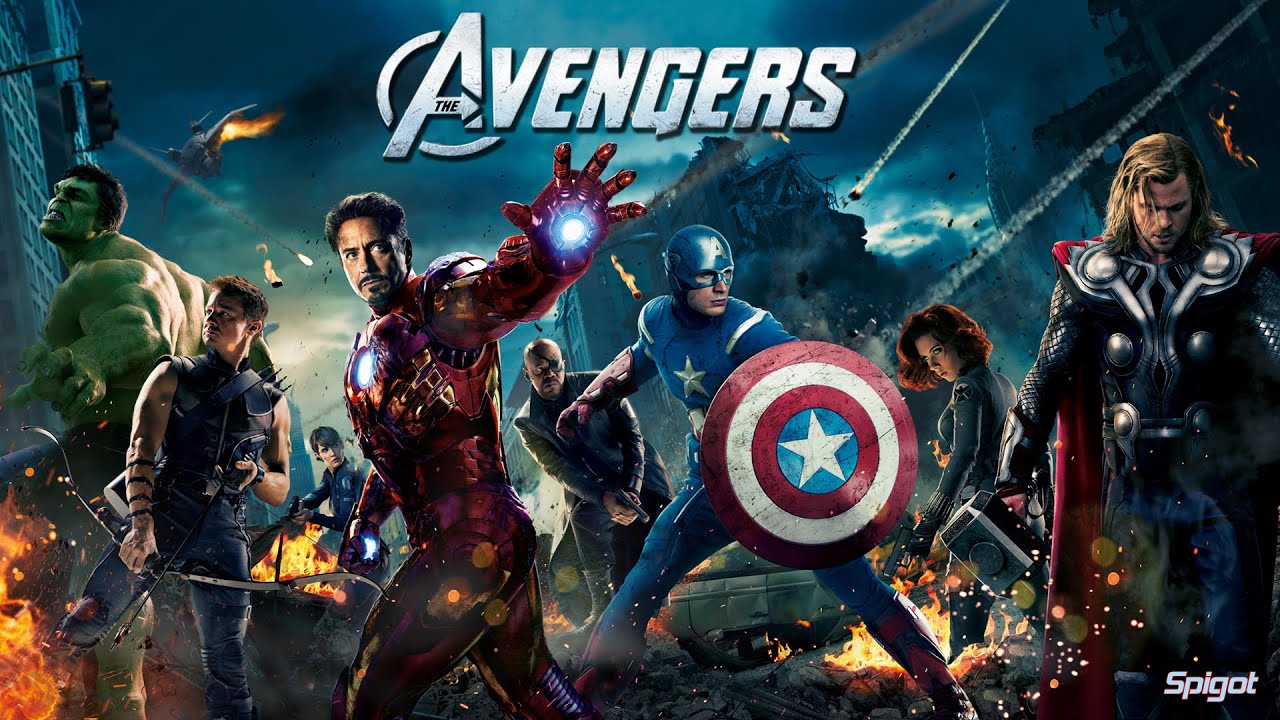
I’m sure you have heard of Marvel’s The Avengers and its its multiple superheroes. They are the Earth’s national defense from foreign and domestic threats. They work as a team, and function as a single unit to overcome forces, including entire armies. This team of super humans each have a job to make this possible. They have a spotter, leader, muscle, and a motivator. With all of these characteristics and compliments you would think that they work well together. Unfortunately, that is not the case. Like all people, they are not perfect. They, just like all of us, have their trials and obstacles. In the end, destiny causes them to come together and be earth’s mightiest heroes.

            The movie, The Avengers, starts off in a top-secret laboratory holding one of the seven infinity stones. These stones hold power that is impossible to contain. Thor’s brother, Loki, has turned evil and wants to steal the infinity stone to bring his evil army down to reign on earth. He performs a surprise attack and succeeds in stealing the infinity stone. That’s when a man named Nick Fury comes in and brings the Avengers together. He recruits the super heroes to join his team and defeat Loki. At first they do not get along. For example, the Hulk is a man named Bruce Banner. Most of the time he is a normal human being, but when you make him angry he turns into a unstoppable green monster. Loki targets the Hulk and tries to infuriate him in order to destroy the team. This evil plan does end up working, temporarily separating the super team. Loki brings his army down and guess who is waiting? Earth’s mightiest heroes overcome their difficulties to save the world and defeat Loki.

The way this movie was made and the bringing together of a certain group of people contributes to the viewing experience. The directors made the stylistic choice of having a slow rising action. The lengthy climax following this slow build up features multiple action-packed scenes, along with a hint of comedic dialogue to reel the audience back in. This style they use helps bring the movie together to become one of the greatest box office hits to hit the big screen.


            This movie was expected to be very climactic, suspenseful, and in general, awesome. The Avengers fulfilled and even exceeded these expectations. The directors did a great a job at introducing the characters from their original movie into this one and having them, in the end, work together. For example, Captain America is fighting Loki, and just when Captain America is about to be defeated, Iron Man comes and joins the scene in a powerful and motivational way.


             I would recommend this movie to anyone who wants to have a fun, action-packed evening. It will leave you wanting more and will make you feel like a superhero too. Before you watch this movie, however, I would recommend that you watch other Marvel Movies to get the full understanding and backstory of why these events happened. As a personal opinion I would give this movie a well-deserved 5 star rating.

To read another Avengers movie review click here

The Mask You Live In

by Alana Thomas

The Mask You Live In, directed by Jennifer Siebel Newsom, dissects modern masculinity and the effects it has on boys as well as everyone else in our society.
The films use of gripping anecdotes and in depth conversations about hyper-masculinity and the affects it has on our society really display the message of this documentary.
The film begins to explain how parents and surrounding influences tell young boys not to express emotions because emotions mean you’re “soft” and “feminine,” and that as a man these things are unacceptable. The only emotion men are able to show without judgment from peers is anger. What we get by setting these standards is a generation of boys that are unable to express their emotions in a healthy way. Sadness and grief are turned into acts of violence and aggression because being sad makes you vulnerable, and “men aren’t supposed to be vulnerable”. In the film, former NFL defensive lineman, Joe Erhmann, says “be a man…that’s one of the most destructive phrases in our culture.” Erhmann says this because that phrase is typically used to cut off a natural expression of an emotion, which is dangerous in the development of boys.

Another interesting topic discussed in The Mask You Live In is the role that sports and coaches play in the development of young boys. Often on sports fields coaches and players alike use language that’s harmful and discouraging. “Be a man”, “stop crying”, “take it like a man”, “what are you a little girl?”, ”don’t be such a f*ggot”. The nature of this language cultivates homophobia and sexism. The same boys that are affected by this language become our fathers and our community leaders. The cycle repeats itself and these same values are passed on to the next generation. The way people view masculinity also directly impacts the way we view women and femininity. As men are expected to become stronger, women are expected to become more submissive and to perform as the weaker vessel, because of the idea that men are supposed to be in control.

In the documentary, a psychologist, Dr. Niobe Way says, “If we’re in a culture that doesn’t value caring, doesn’t value relationships, doesn’t value empathy, you are going to have boys and girls, men and women, go crazy.” Here, Dr. Niobe is explaining how the cultivation of hyper-masculinity affects both men, and women. Continuing to cultivate hyper-masculinity in men will be damaging to the well-being of our future generations, which is why we must become more conscious in  the way we cultivate masculinity.  

penids and pudssy 


Go here for further insight on The Mask You Live In.